As you may know, a global lockdown during the Covid-19 pandemic has caused many of our cities to appear empty as citizens have entered into self-isolation. One of the first things I noticed was how quiet the night and mornings are these days.
The main thing not mentioned in dreams or visions of empty cities is that they would not remain empty, but wildlife would likely move into these empty cities over time.
Just as we've seen occur in nuclear dead zones where humans evacuated the areas.
As we know from Chernobyl and its infamous exclusion zone, Time will reveal all. In many respects, Chernobyl is a radioactive experiment, unfortunately. Even more tragic, is a 2nd nuclear experiment we can now learn from; and, that is from the exclusion zone from Fukushima, Japan: A radioactive forest in the heart of the Fukushima exclusion zone.
We've been documenting abandoned buildings, sites and even abandoned ghost towns for over 10 years but we've never seen anything like the empty cities of China.
Ghost towns normally have meant towns once occupied but through some kind of economic hardship, or some kind of natural environmental disaster, that has rendered the town unable to persist as in its former glory days due to its present hardship(s).
The empty ghost cities of China are notably peculiar in that they've never been occupied, but have remained ghost towns since their inception.
These are abandoned cities from the get-go. It's peculiar. Even surreal.
Considered to be the oldest grain elevator of its kind in Canada, built-in 1897, by the Lake of the Woods Milling Co. in Winnipeg, Manitoba. it continued operations with several ownership changes until 1968. Since 1968, the oldest historical grain elevator in Canada has stood vacant and abandoned to this day. We know certain grain elevators have been transformed into small homes and bed and breakfast establishments over the last few decades, but we don't know why this grain elevator has stood abandoned as long as it has so far, to this date.
Source: Archives of Manitoba, Architectural Survey)
((1967)Source: Archives of Manitoba, Architectural Survey.)
Copley Anglican Church and Cemetery, originally known as St. George's Anglican Church, built-in 1892. Over time, as the original settlement passed away and diminished, the church deconsecrated in 1913. This historical church has remained in its remote location since 1913 untouched, except for folklore stories about it being used as a boot camp during the prohibition years and during the 1930s, locals attempted to protect this site by finally boarding up all doors and windows. Still fully intact in the 1960s, since then the natural environment has finally taken its toll upon this historical structure. In a 2011 exploration, the images reveal that only the outer walls remain intact and that nature since has ravished this historical site over time since 1913.
(Main Street, Winnipeg, Manitoba circa 1895. Source: National Archives of Canada)
Some of you are aware that Canada has never been considered one of the best countries in the world to explore abandoned sites, due to Canada's national policy for demolition projects of derelict buildings or converting derelict properties over to new owners, often into the hands of non-profit organizations. Oftentimes, a non-profit revitalizes a derelict property preserving it into a historical monument for decades to come. Alternatively, many a non-profit just doesn't have the funding to make a complete conversion and a vast number of the buildings remain derelict at the site for decades longer.
These properties are wonderful opportunities for photographers and historians to explore. Unfortunately, for many of us, we don't know they're out there to explore. No one is going to advertise these histories, locations and so on unless you travel the country roads a lot or keep up with the sporadic media reports about these landmarks. Your only other resource is spending unlimited hours in historical archives.
I'm all for preservation of historical sites, but the renovation process often renders the historical artifacts and architectural features obsolete. Once lost, these are never recovered unless someone documents them first. The preservation and renovation leans more to a symbolic historical monument then anything tangible. We need to remember that often times those derelict sites contain histories our culture doesn't want to remember. And that's why we not only call those marginalized and abandoned but also the forgotten one's.
The kinds of explorations some of us do do NOT end up in our Canadian school system's text books. History is continually erased where those would like it to be erased. However, I ask a vital question about this erasure. How does a culture, a nation, whatever this may be learn from their past mistakes in this manner? Perhaps we're all prone to wanting to hide our mistakes, shove them in a deep, dark closet or up into a musky, damp attic until the day we throw it all away or demolish it out of sight and memory.
Sometimes we can't even do that, as in the cases of nuclear tragedies such as Hiroshima, Chernobyl and Fukushima. Well, as some of us know, this is when we encounter the BS campaigns, orchestrated by governments, the international media and big corporations that have an invested interest in these outcomes. And they would just like us to know they would prefer we know as little as possible. Happy, ignorant sheep continue to be consumers, and every nation needs consumers. Some of us are still waking up' and enraged that democracy seems to have very little to do with 'protecting' the people and more to do with protecting big corporation, this includes the lies and coverups to cover up all the environmental disasters throughout history due to big corporation.
This also includes the cover ups of institutionalized 'mental asylums' where those not wanted in society were suddenly labeled with a 'mental disorder'. Imagine living in a generation where parents or your husband, just thoroughly sick of you for whatever reason, you've become an emotional or financial burden, maybe your husband didn't want to suffer the public embarrassment of divorcing you? So they could just drop you off at the nearest asylum? You have to wonder if those family members slept at night considering the 'cutting edge' therapeutic technologies that went on in asylums, like lobotomies, ice baths, electric shock therapy and brutal restraints to name a few.
This is why it's so essential for some of us to document what we can before it all fades. For me, sometimes it's a fine line between truth and deception, life and death and giving honor to those who have been forgotten, most often buried in unidentified graves. Just another number. No name. Their voices muted and then demolished out of memory. Out of history. This is my passion. Follow us this year as we travel and document Manitoba's abandoned places. Sometimes haunted places. The voices of the past still speak, of our ancestors, our history, right out of their unidentified graves, if we listen closely enough.
Over the last year or so, since we wrote a blurp about Elena Filatova on this blog, I've randomly run across some unsavory words about Elena across the web. It appears some peeps want to think Elena is a fraud.
I'm not buying it. In the first place Elena's photography is photojournalism, it's not piped up with Photoshop for some fraud attack. Get real people. It borders on slander and public slander, and unless you have proof, you shouldn't publish stuff like that.
Lastly, getting permission to enter a site to photograph is not fraud. I have. Other's have. One example we've already published here. And it's actually sometimes the right thing to do in some circumstances.
Breaking and entering doesn't make you or anyone a photojournalist, an explorer or a historian. It's make you a person committing a B and E. And whether Elena had permission or not doesn't take a way one iota of the decade of heart she put into her mission.
I want to give a new website on the web a 'two thumbs up' for quality stories, history and interesting facts - not to mention some quality images. The website in question is Environmental Graffiti. The site consists of your typical types of topics, asylums and other abandoned buildings, but also includes a variety of historical context, such as these Mental Baggage: Abandoned Suitcases from an Mental Asylum.
We wanted to write about Elena Filatova, an explorer at heart and creator of a 10-year online journal documenting her explorations by Motorcycle in the dead zone of (and beyond) Chernobyl. We highly recommend her website consisting of 10 years of intimate photojournalism into the behind the scenes story of what has really happened since the nuclear reaction at Chernobyl in 1986.
Her journals and photos are poignant while weaving political history, scientific antidotes, her personal impressions and true life stories of the abandoned people and animals, not only within the dead zone but in hundreds of ghost towns 40 to 80 kms away from the Chernobyl nuclear disaster site.
Elena Filatova has made exploring these areas and ghost towns a life long hobby and this year at the 10th anniversary of her website published Chernobyl Photobook ' Ghost Town.'The proceeds go toward the author buying food supplies and essentials for all those still remaining in the irradiated and abandoned ghost towns and villages to this day.
We are also fond of the authors journal 'Land of the Wolves.' And recently, her concerns are for the recent nuclear disaster at the Fukushima nuclear plants in Japan:
"Nowadays, we are moving from catastrophe to catastrophe so fast that no
one has time to learn from what is happening, thus we are doomed to
repeat it all again and again. Each time history repeats itself the
price goes up.
My aim is to take hold of important events I have witnessed and rescue
from oblivion deeds that have been forgotten or chosen to have been
forgotten. With time, cities perish and the memory of things is lost, so
the sole purpose of my work is to preserve memories on the internet
forever.
Since the Ghost Town site first went on the Internet in 2003, tens of
millions visitors have viewed the Chernobyl information which it
provides. This site is maintained by me, the author, and is completely
free of all popup ads and spyware. There are no copyright issues.
Work on this site is my hobby, which I pursue in my free time.""
We can't say enough good things about the authors courageous explorations into contaminated areas, her insights and obvious passion for her cause. In our mind's, Elena Filatova is the epitomy of what it means to be an explorer who explores the abandoned.
We are sorry. We were posting about the environmental tragedy of the
Fukushima nuclear reactors in Japan for some time, and then things came
up, and we thought Japan was onto things quicker in regards to cleanup
as they suggested (We recollect the cold shut down was to commence no
later than 2012). We and Tepco were wrong.
We are back.
Never in our lives did we think we would ever be posting on our blog
about abandoned places, people and ultimately about our potentially
abandoned earth in the future.
But as explorers of the
abandoned, we explore everything, sometimes by leaving only foot prints
behind, and sometimes in our arm chairs looking onto events we cannot
control, about complete abandoned civilizations as per 'Ecocide'.
At
the root of all abandoned phenomenon, as we have believed right from
the start, is the abandonment of our civilization, history and common
sense. We have abandoned ourselves and one another, as depicted in the
history of all abandoned places and people on this planet, including the
ultimate extinction of so many great civilizations before ours, all
overcome by various outcomes of ecocide.
The history of grain elevators is a rich and diverse discourse in North America. Both the USA and Canada contain fascinating historical landscapes of the early agricultural boom which once permeated North America.
Grain elevators stood tall and proud in urban cities as well as in rural communities. Beacons of prosperity and wealth, these elevators cast a gentle aura of hope, stability and safety upon everyone. After all, everyone has to eat to live.
In the United States, I recently visited Buffalo, New York - an historical grain elevator mecca. Many grain elevators in Buffalo have been abandoned; a play ground for urban explorers and photographers. After laying barren and open to the curious, there is talk of demolitions these days.
After visiting Buffalo and its rich history of grain elevators, next on the list is the exploration of Manitoba's rural grain elevators in Canada - what is left of them. Manitoba has also been recognized as a mecca for a history of grain elevators, but many have been torn down.
The flimsy safety of believing these sturdy historical landmarks won't be demolished is vastly replaced with a surety that these landmarks will not be there as long as we once took for granted.
Since Japan's earthquake and tsunami on March 11, 2011, nonprofit and individual heros have come to the rescue pooling common resources, skills and talents in a time where Japan's resources are temporarily disabled. In times of disaster, the international community reminds me what is heroic about the human spirit.
Over a month later, there is still much that needs to be done. There have been hundreds of thousands of displaced people without homes, water or considerable comfort. Many of the people who lived close to ground zero the the Fukushima plants will not be able to return to their homes for many long months, years or decades. Displaced family pets have been left abandoned and the longer it takes to pool resources the less likely we can help.
Let's help. The Internet community is a viral community with the potential for crowd pooling of our resources. The Internet can help us reach out and make a difference. Families can make YouTube videos offering their homes to help displaced families in Japan to have a roof over their head. Others can ask for donations from Internet communities, like A Place to Call Home. You can add the widgets to websites, blogs or social media sites like Facebook. There are a lot of creative things we all do through Internet connections and it adds up when we all chip in!
Urban exploration can mean different things to different people. And that's fine. But since our exposure to the Internet, exploring has become a popular past time with all kinds of different theories about what it is ...
I think we can all agree on one thing though, that explorers go places most reasonable adults won't. I'd like to share a few Do's and Dont's about urban exploration.
Our Urban Exploration "Do Tips":
1) Explorers have a natural curiosity. Exploring started when I was a child. I bet for many of you the same applies. I get real excited before I explore. However, as an adult it's often illegal in certain situations. Do No. 1:Know your rights, and legalities.
2) Explorers scout their location, online and off. Before the Internet, explorers scouted locations, so the Internet does not make scouting easier, and actually could lead to mistakes. Research is a part of scouting as well as visiting the physical location. Do No. 2: Do your research and try to avoid foolishness.
Foolishness tends to land explorers in jail, or with a hefty fine, or possibly getting shot with a rifle for invading someone's home unwittingly ... Like in this video inserted below. It's likely best not to bring along those break-in gadgets like in this video below, because this leads us to one of the main 'Do Not' Tips (Do Not break and enter).
3) Do be respectful of others, artifacts, and yourself. Other dangers associated with exploring can include loss of limbs, or even death, from falling through a floor or staircase. It has happened, so 'do' be careful.
4) Have fun. Exploration is not an elitist past time, but open to anyone who has a sense of adventure and curiosity. Likewise, those who think the idea of fun is vandalizing, looting and stealing are not urban explorers. They give urban exploration a bad name.
5) Do attend locations which have tours, or open houses or are willing to to give you a private tour. Urban exploration is not all about infilteration, no matter what others say.
Our "Do Not Tips" Are:
1) Do Not steal anything. Taking is stealing. The golden rule: Take only photos, leave only footprints.
2) Do Not force entry. That's called break and enter you know. Most explorers, when practicing infilteration, seek out existing openings. Unless all is boarded up, if in doubt, assume someone is occupying the location before wielding that crow bar! Try knocking on the door, and be sociable, it at all possible ...
3) Do Not make assumptions based off of Internet data because sometimes locations are occupied, or are revitalized, and no one has gotten around to updating this yet. Tread softly.
4) Above all else, Do Not become a self-righteous urbexer. We all did this when we were kids - it's fun. As adults though, explorers share slices of history that are actually interesting and enrich our art and culture. Focusing on how exploring benefits the community at large keeps the elitist ego trip in balance ... Keep your ego in check.
When these are in balance, urban explorers gain our respect for venturing into spaces where no one else has dared to go before.
An urban exploration video of an abandoned church:
I was posting a Blue Man Group video earlier today and begun thinking about the wastelands of America I've witnessed in my personal explorations and travels. Urban and industrial decay is not only a tragedy of abandonment but of the environment.
Take, for instance, a small coal town in Pennsylvania - Centralia - where a mine fire has been burning under the ground for nearly 50 years. Centralia is now a ghost town, but the smoldering fire will burn hundreds of years spreading to nearby towns.
What to think of all this? I'm not sure entirely. But environmental disasters are some of the key forces behind cultural abandonment's. Man playing with nature as she builds her industrial playground have consequences. Below is Blue Man Groups video "Earth to America"!
Recently, I was exposed online to Mike Dijital’s urbex work and degGi5, so I wanted to (humbly) write a few words about Mike and his work as urban explorer simply because he left an impression on me.
I was exposed to Mike’s explorations one night as I was seeking out a possible local urban exploration group near to me. I stumbled on an AC article, written by FreakMamma, derived from an interview with Mike Dijital. One thing lead to another – you know – following the links, and now its history to be written about.
Mike Dijital’s work symbolizes what authentic urban exploration is all about. You may want to look at his work, which you can find at his website. His work has been featured in Weird US’ Weird Massachusetts, as well as having a hand in films such as Session 9, Nothing Better, and the research and trailer for Project 17.
Mike also has a few publications in circulation, some in collaboration and his own collection of photography in Abandoned. It doesn’t end there. Mike’s hobby is definitely a passionate one.
He is also the founder of degGi5, a private group forum for explorers, including the weekly degGi5 show on Thursdays. The forum is a safe place for explorers and urban armchair explorers alike.
All Material in this Photo Blog Gallery is Copyrighted & May not be reproduced, copied, edited, published, transmitted or uploaded in any way without my permission. All Rights Reserved.
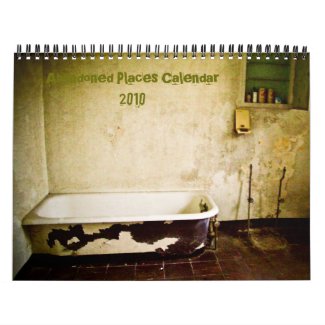
I started creating a new 2010 calendar for Abandoned Places, which I'm fairly excited with! One thing lead to another, and I started playing around with a few other gift ideas emphasizing the abandoned places photos. I guess we now have a new abandoned places gift store online, so please come and visit and share your thoughts! Cheers
These were captured in the season of winter, while I continue to document time with the same subject through the seasons. There's certainly a different perspective illuminated this round in comparison to summer or fall captures.
Snow can be a natural unifier in photos, and winter light usually elucidates a stark landscape due to the low angle of the sun. While the winter light and snow produce obstacles and undesired qualities at times, winter light also reveals deeper textures and soft hues amidst long shadows often associated with the winter light.
Winter light is indeed one of my favorite light sources. Fall is also one of my favorite light sources with all of it's red hues as the days shorten, mirroring the dramatic changes happening in the fading foliage.
Thus, I grouped my fall (early fall/late summer) collection of the abandoned car as the 'Eye of the Storm'. I may group this winter set as Fade to White, or Fade to Winter Light.
All Material in this Photo Blog Gallery is Copyrighted & May not be reproduced, copied, edited, published, transmitted or uploaded in any way without my permission. All Rights Reserved.
We're recording a slice of time each time we photograph a moment. Photographers have the ability to suspend a moment in time.
Many moments can never be captured again, and it's necessary to capture split seconds. Expressions of the human face, for instance, are fleeting seconds. Recording time can also be the moments of capturing the speed of the subject, or stopping the clock in a timeless scenery.
Documentary photographers are recording time. Moments of civil upheaval demand quick reflexes. Urban street photography requires a photographer's wits about them.
Urban photographers capturing the final remnants of abandoned places have little time in most cases, on location, and in the likelihood the structure may be removed at any time.
But recording time can be as unassuming as capturing the seasons and the hours of shifting light. It is true that time never stops providing the photographer with endless change all around them, even in the simplest, humblest moments and subjects.
Humble moments taken close to home can make some of the best photography. Many of these moments allow the photographer time to revisit the subject multiple times rendering a new perspective each and every visit.
You can never take enough captures. Capturing the same image over extended periods of time through the seasons, years, or changes in lighting allows the photographer to grow intimate with the subject and discover something new each time.
My abandoned car photographs are just this premise, visiting in the change of seasons.
All Material in this Photo Blog Gallery is Copyrighted & May not be reproduced, copied, edited, published, transmitted or uploaded in any way without my permission. All Rights Reserved.
Photographers deal in things which are continually vanishing and when they have vanished there is no contrivance on earth which can make them come back again.
-Henri Cartier-Bresson-
Public Commons
We see the beauty in decay and the shadowed dreams of the forgotten.